
Sarah’s Too Loud Laugh
One of Sarah’s first 360 reviews as a school leader said that her “American laugh" was "too loud and very annoying.”
Apart from being offended as a Canadian, she was mystified as to why loud laughter would be annoying. Surely laughter shows a joyful emotion that people working in a friendly team in a friendly school wouldn’t feel irritated by? To Sarah, laughter was a sign of a positive team culture, and a way of showing enjoyment, openness, and approachability.

With some reflection, she began to recognise a deeper lesson about cross-cultural communication: we often interpret other people’s behaviour through the meaning we attach to it.
The same expression can send different messages depending on the cultural context. For some people, a loud laugh signals enthusiasm and connection. For others, excitement or appreciation may be communicated in quieter ways, through a smile, a thoughtful response, a private conversation, or simply being fully present.
Sarah realised that the challenge was to expand her awareness of the many ways people show engagement, enjoyment, and connection.
She became more intentional about noticing different communication styles, and not to make assumptions, but to stay curious. A quieter response did not necessarily mean someone was less enthusiastic. A big laugh did not necessarily mean someone was being annoying. The meaning depended on the person, the relationship, and the context.
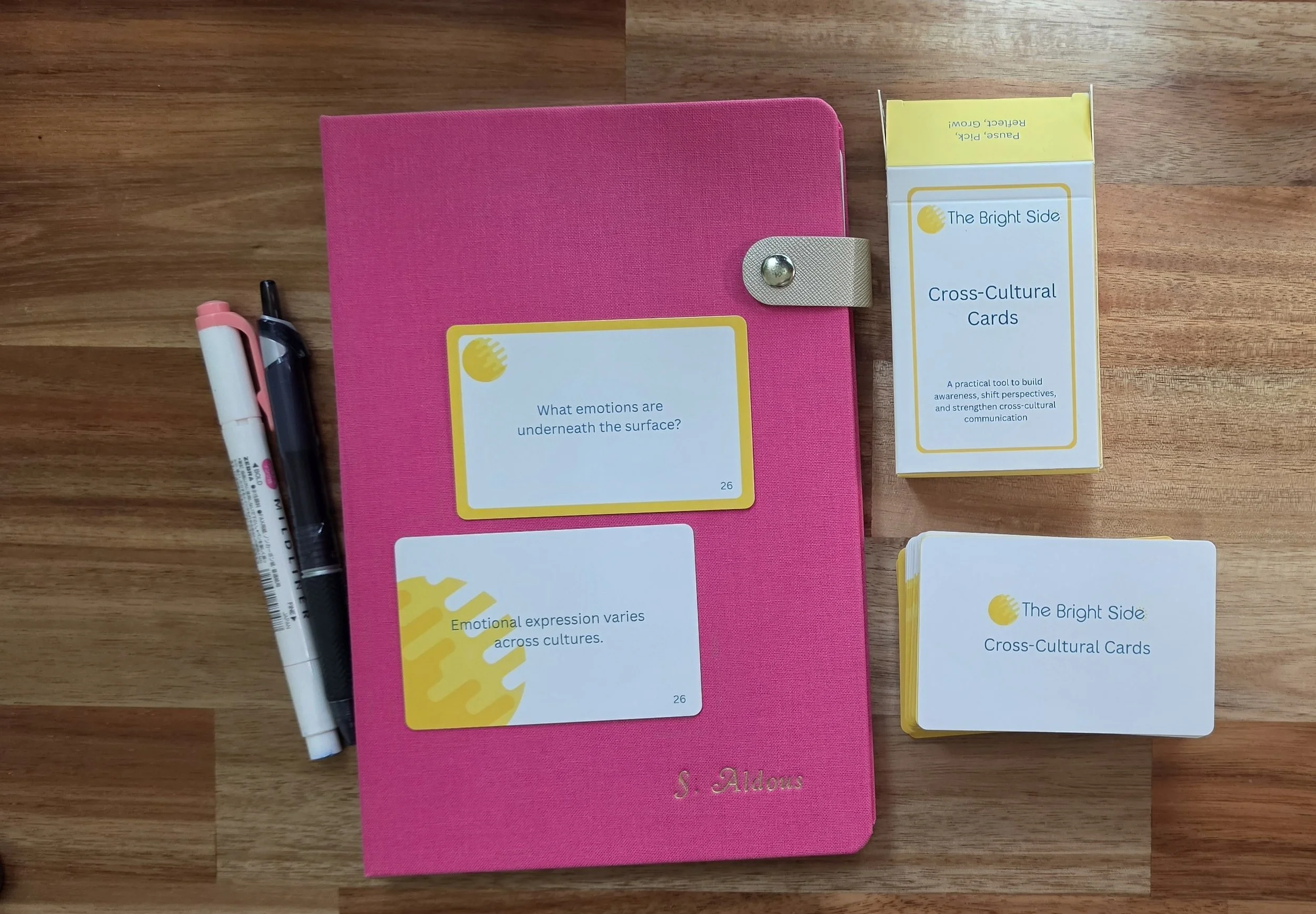
Our cross-cultural cards: they have a statement on one side and a reflection question on the other.
Sarah still laughs loudly. (Mostly.)
But she now knows that her way of communicating is only one of many possible ways, and is learning to recognise others’ signals of engagement.
🔸 What behaviours do you interpret quickly through your own cultural lens?
🔸 How does your interpretation differ from your colleagues or students?