
“You’re Looking Fatter!”
As I walked down the driveway of my Hong Kong apartment building, the security guard called out cheerily to my friend, “Morning, you’re looking fatter!”
I (Sarah) turned to her. “Gosh, does he always speak to you like that? So rude commenting on your weight, right?”
As she pushed her baby in the pram, she replied, “Relax, he’s just trying to show me that he cares. I think the guards realised I’ve had a difficult year with sleep because we’ve been walking by at all hours of the night and day. I think he’s trying to say that he’s pleased I’m looking a bit healthier.”
My friend’s baby had been particularly inconsistent with sleep, even as she passed the one year mark. Now that I noticed it, my friend was looking a bit healthier today.

Photo: Walking in my Hong Kong neighbourhood of Pokfulam in June 2024.
A comment about someone’s body fat would be inappropriate in my home culture, but in Hong Kong (and most of Asia), it shows care and connection.
Realising that care can be expressed in this way was an eye-opener for me. It made me realise the difference that sometimes exists between intention and impact.
Someone may intend to say something kind, but the impact on someone from another culture may be unkind.
Learning about intention and impact made me much more aware of my own cultural viewpoints and keen to learn about what other cultures view as kind, caring, thoughtful, and so on.
🔶 When have you experienced a mismatch between intention and impact?
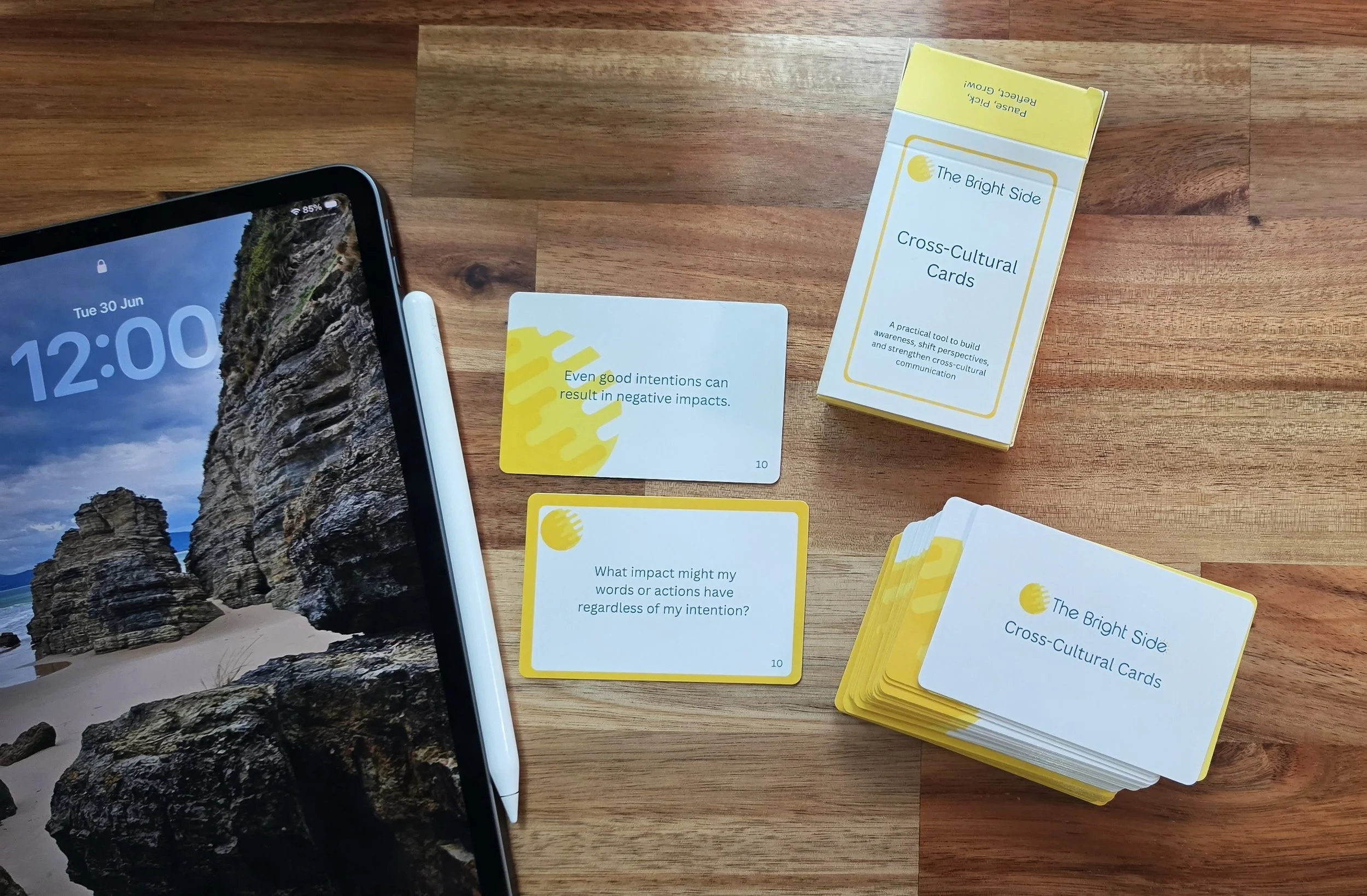
Our new Cross-Cultural Cards - you can buy your own set in our Shop.
We lead training for international schools about cross-cultural communication. Intention vs impact is a special feature in our training for school customer service teams. Learn about one recent workshop here.