
High-Context Communication in Chinese
Sarah started learning Mandarin Chinese and had an insight about high context communication.
“High context communication” means listeners and speakers rely on the context and often read between the lines to understand what is being said.
Sarah is finding some new sounds difficult to pronounce. ("It’s like talking while holding marbles in my mouth”!)
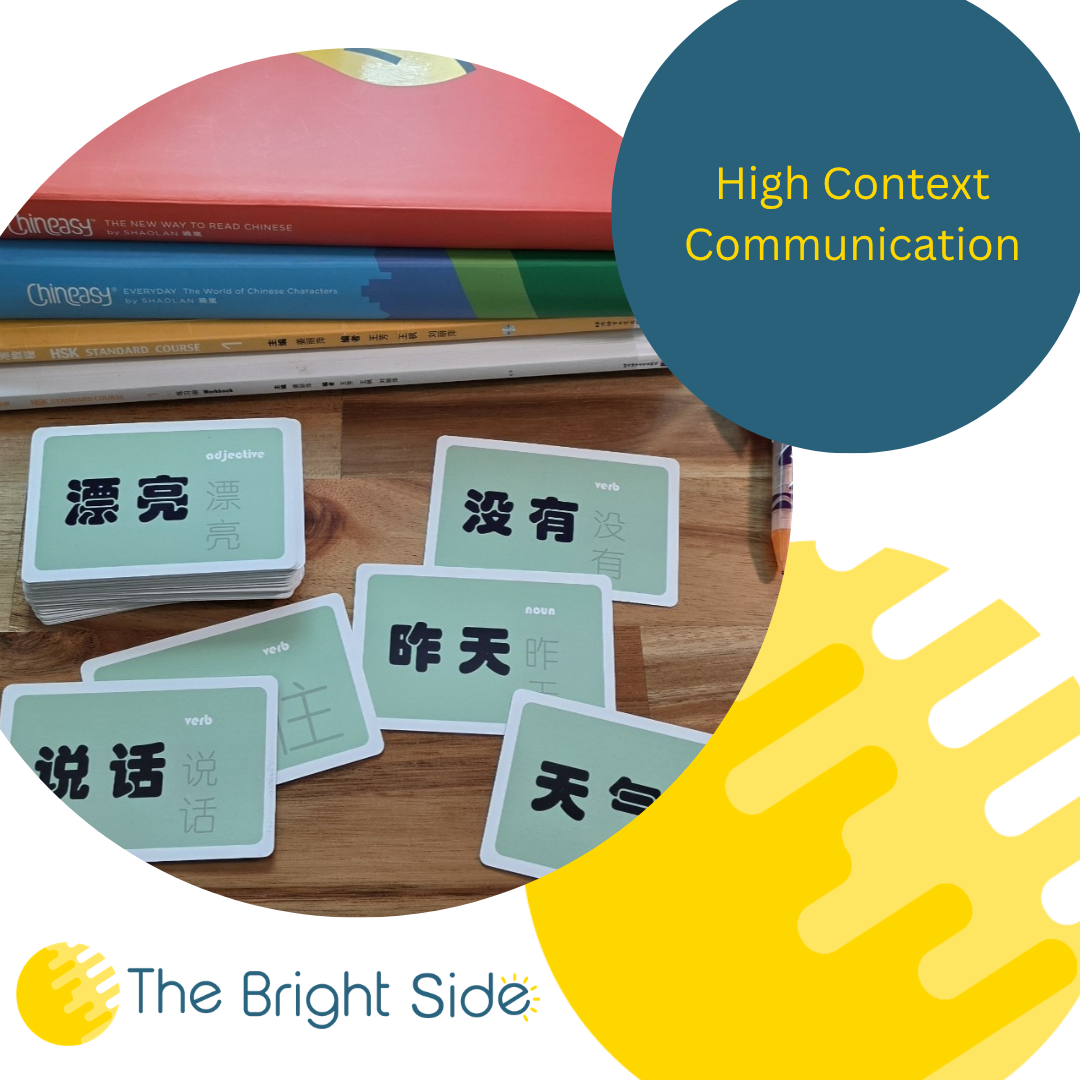
Most Chinese words are short - just one or two characters - especially at a beginner’s level. But this also means that Chinese has many words that sound the same and listeners need to understand what is being said by using the context.
Learning to listen for context gave Sarah a new insight: this is one reason for China’s culture of high context communication.
Furthermore, there are many other reasons for China’s high context culture, many of which go beyond the language to cultural values and norms. For example, China has a culture of understatement that means those who imply ideas are more polite and sophisticated than those who spell things out.
As a result, some Western educators can misunderstand what Chinese parents might be trying to communicate when they imply their messages. Implied messages seem obvious to the Chinese speaker because they are familiar with using context for clues.
Next time you talk with a Chinese parent, listen for contextual clues for what they are saying:
🔸 What is being implied?
🔸 What is being de-emphasised?
🔸 What is being left out that you should probably notice?